
General
AIOps Meets DevSecOps: When AI Without Guardrails Becomes Your Biggest CI/CD Risk
There is a quiet revolution happening inside CI/CD pipelines. In just over a year, AI has moved from novelty to dependency.
In the world of DevOps, Infrastructure as Code (IaC) has revolutionized how we manage cloud infrastructure, replacing manual configurations with declarative, version-controlled code. However, as cloud-native applications grow in complexity, a new paradigm has emerged: GitOps.
GitOps extends the principles of IaC by using Git as the single source of truth for infrastructure and deployments. Every change—whether to infrastructure, application configurations, or security policies—is committed to a Git repository. From there, automation agents ensure that the actual system state always matches the declared state in Git. If drift occurs, the system automatically corrects itself.
This approach brings the best of software development workflows—version control, pull requests, and automated testing—to infrastructure operations. As a result, GitOps is rapidly gaining traction across industries, from startups looking for agility to enterprises needing stronger compliance and security.
But why is GitOps trending now, and how does it fit into the broader evolution of Infrastructure as Code? Let’s explore.
The rise of GitOps is fueled by the increasing complexity of cloud-native infrastructure and the need for faster, more reliable deployments. Traditional DevOps practices rely on manual interventions and ad hoc scripts, leading to configuration drift, where production environments become inconsistent with the declared configurations.
GitOps solves this problem by ensuring that any change to infrastructure is first made in Git, approved through pull requests, and then automatically applied to the live environment. This creates a system where every change is auditable, reproducible, and easily reversible.
Kubernetes has been a key driver of GitOps adoption. With its declarative nature, Kubernetes is perfectly suited for GitOps workflows. Tools like Argo CD and Flux continuously monitor Git repositories and reconcile Kubernetes clusters to match the desired state.
But in 2024, GitOps is moving beyond Kubernetes. Organizations are now using GitOps principles to manage cloud infrastructure, databases, networking, and even CI/CD pipelines. The goal is to create a fully unified “everything-as-code” approach, where every part of the infrastructure follows the same Git-based workflow.
At the heart of GitOps is Git itself. Platforms like GitHub, GitLab, and Bitbucket serve as the central repository for all infrastructure definitions. Every change—whether updating a Kubernetes deployment, modifying a database schema, or provisioning new cloud resources—is stored as code.
To enforce GitOps workflows, organizations rely on continuous delivery (CD) tools that automatically apply changes from Git to the live environment. For Kubernetes, Argo CD and Flux are the most widely used GitOps tools. They monitor Git repositories for changes and ensure that clusters are always in sync with the desired state.
For non-Kubernetes infrastructure, tools like Terraform Cloud and Spacelift integrate Git-based workflows into infrastructure provisioning. Developers can make changes to cloud resources (such as creating an S3 bucket or modifying a security group) through pull requests, and these tools automatically apply the changes after approval.
As GitOps adoption grows, so does the need for policy enforcement. Organizations are incorporating policy-as-code tools like Open Policy Agent (OPA) and Kyverno to automatically check for security and compliance violations before changes are merged into Git.
GitOps is particularly valuable in industries that require consistency, reliability, and automation at scale.
In financial services, where regulatory compliance is critical, GitOps ensures that all infrastructure changes are fully auditable. Multi-cluster Kubernetes deployments across development, staging, and production environments can be automatically synchronized, reducing the risk of misconfigurations. If an issue arises, teams can instantly roll back to a previous stable state by reverting a Git commit.
Tech companies with globally distributed services are using GitOps to manage multi-cloud and edge deployments. Instead of manually updating clusters around the world, teams commit changes to Git, and automation agents propagate those changes to all environments in a controlled, repeatable manner.
GitOps is also improving collaboration between development and operations teams. Developers can propose infrastructure changes through merge requests, allowing operations teams to review and approve changes using the same processes they use for application code. This reduces bottlenecks and accelerates deployment cycles.
Companies like Netflix, Intuit, and Alibaba have shared how GitOps has transformed their infrastructure management, enabling faster deployments, greater stability, and self-healing systems that automatically revert unintended changes.
Despite its advantages, GitOps is not without challenges. Adopting GitOps requires a mindset shift—operations teams must become comfortable with Git-based workflows, and developers must learn infrastructure-as-code principles.
One of the biggest concerns is secret management. Since Git repositories are typically public-facing within an organization, storing credentials and sensitive configurations in Git poses security risks. Solutions like HashiCorp Vault, Mozilla SOPS, and AWS Secrets Manager help encrypt and securely manage secrets while keeping them out of Git.
Another challenge is tool complexity. While GitOps is straightforward for Kubernetes, extending it to non-declarative systems—such as databases or network configurations—often requires integrating multiple tools like Terraform, CI/CD pipelines, and policy-as-code frameworks.
Governance is also a major consideration. In a GitOps environment, Git access is equivalent to production access. Organizations must enforce strict role-based access control (RBAC) to prevent unauthorized changes and establish clear policies for managing repository permissions.
Scaling GitOps in very large environments can introduce performance issues. A single Git repository managing thousands of services can become unwieldy. Companies tackling this challenge are adopting hierarchical GitOps—using multiple repositories or layered GitOps structures to distribute infrastructure management more effectively.
For teams new to GitOps, the best approach is to start small. Begin by version-controlling infrastructure definitionsand deploying a non-critical application using GitOps. This allows teams to get comfortable with the workflow before expanding to more complex environments.
A key practice is to enforce pull requests for all infrastructure changes. This ensures that every modification is reviewed, reducing the risk of accidental misconfigurations. Organizations should also integrate policy-as-code checksinto their CI/CD pipelines to catch security issues before they reach production.
Setting up a robust secrets management strategy is another critical step. Using tools like Vault or SOPS prevents sensitive information from being stored in Git, reducing security risks.
As GitOps adoption grows, teams should invest in training to ensure that both developers and operations engineers understand Git-based infrastructure management. A well-trained team is essential for scaling GitOps across an organization.
GitOps represents the next evolution of Infrastructure as Code, bringing automation, version control, and security to every aspect of infrastructure operations. By treating everything as code, organizations can achieve faster deployments, reduced risk, and improved collaboration between development and operations.
As we move further into 2024, GitOps is expanding beyond Kubernetes, shaping the future of cloud infrastructure automation. Companies that embrace GitOps today will be better positioned to scale efficiently, maintain security, and innovate faster.
For teams looking to modernize their DevOps practices, GitOps isn’t just an option—it’s becoming a necessity.
Are you ready to implement GitOps in your organization? Start small, refine your workflows, and gradually expand your automation strategy. The future of infrastructure is declarative, version-controlled, and fully automated—and GitOps is leading the way.
Originally published on opshero.com
There is a quiet revolution happening inside CI/CD pipelines. In just over a year, AI has moved from novelty to dependency.
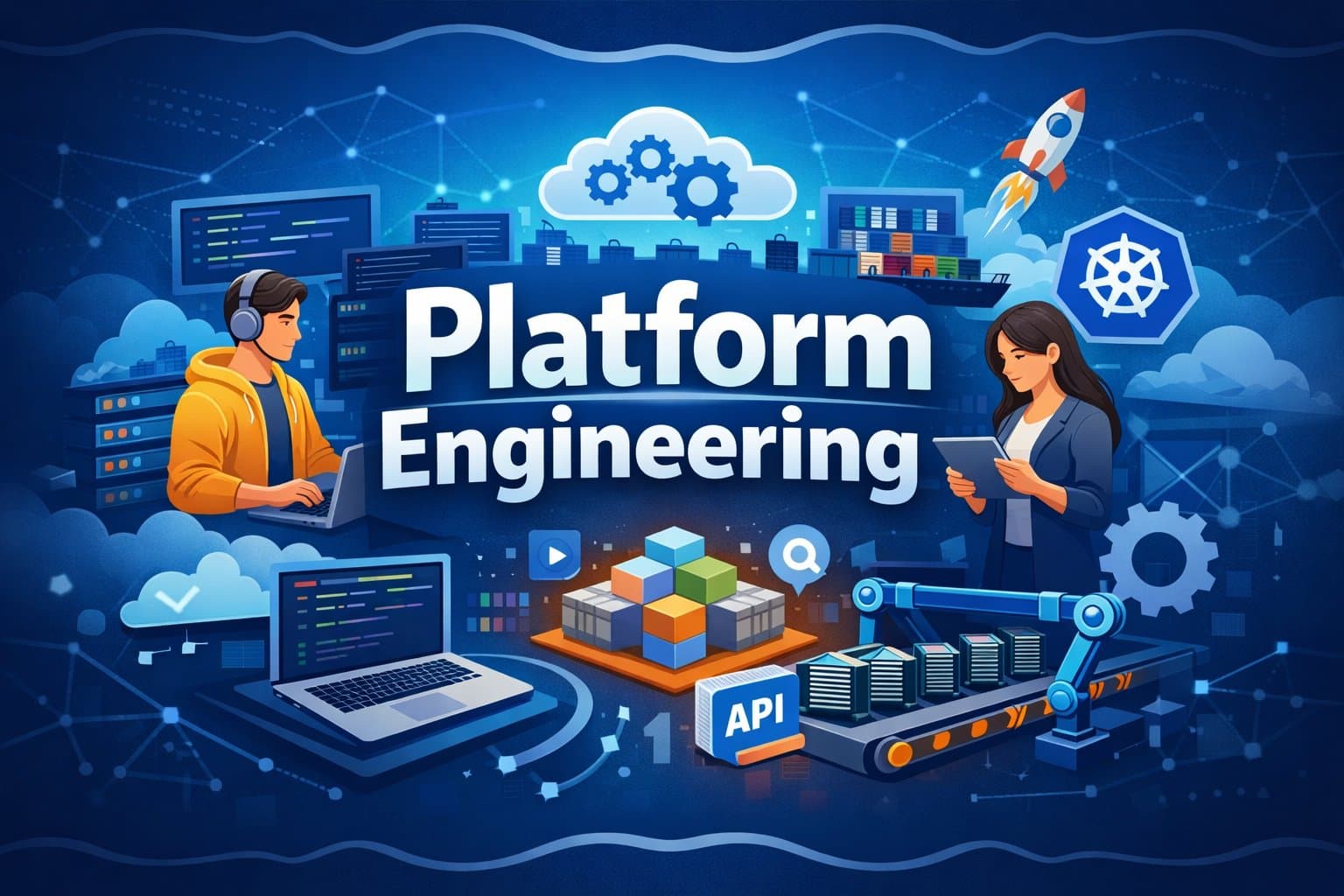
Why sustainability and platform engineering are the new DevOps frontiers, as cloud-native infrastructure keeps growing.
Kubernetes has become the backbone of modern infrastructure. Every quarter, a new release brings changes worth testing early.